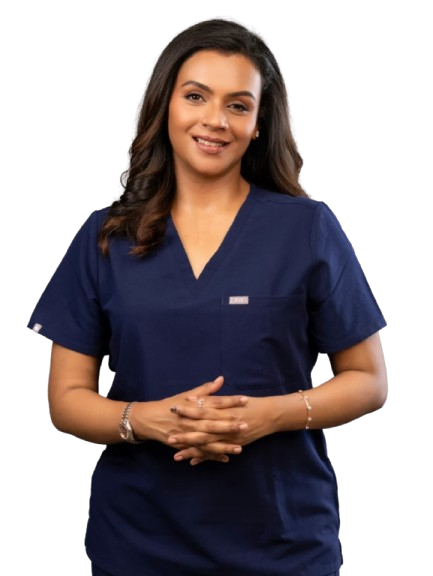
Dr. Preethi Mrinalini K MBBS, MS (Gen. Surg.), FMBS, FARIS (RCS Edinburgh), has more than 12 years of surgical experience and has performed over 10,000 surgeries, with a reported 99% success rate. As Chief Consultant Surgeon at Marina’s Clinic, her work includes laparoscopic procedures for hernia, gallbladder, appendix, and weight loss conditions. Her training has been focused on surgery from the beginning. After completing her MS in General Surgery, she pursued further training in Minimal Access Surgery, followed by a dedicated fellowship in Metabolic and Bariatric Surgery (FMBS).
She also holds FIAGES, a fellowship from the Indian Association of Gastrointestinal Endo Surgeons. Alongside her work at Marina’s Clinic, she currently serves as a Consultant Surgeon at Apollo First Med Hospitals, Greams Road.
For patients searching for the best laparoscopic surgeon in Chennai, experience matters, but so does choosing a surgeon who can explain whether laparoscopy is actually the right approach for your condition.
Talk to a surgeon
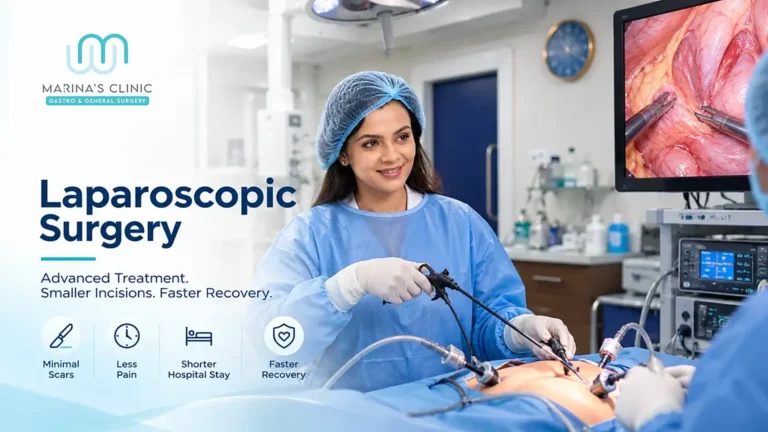
Laparoscopic surgery meaning is fairly simple. Instead of making one large incision, the surgeon operates through a few smaller cuts.
A thin tube with a camera, called a laparoscope, is inserted through one incision. It gives the surgeon a magnified view inside the body, while specialised surgical instruments are inserted through the other incisions.
Laparoscopy is also commonly called lap surgery, laparoscopy procedure, laparoscopy surgery, or laparoscopy operation.
In practical terms, the technique allows the surgeon to see and operate inside the abdomen without creating the larger opening generally required in traditional open surgery.
Laparoscopic surgery is used across several specialties. At Marina’s Clinic, Dr. Preethi commonly uses it for hernia, gallbladder, appendix and weight loss procedures.
Compared with traditional open surgery, laparoscopic surgery may offer several benefits for suitable patients:
Laparoscopic surgery is usually performed under general anesthesia, which means the patient remains asleep during the operation.
However, the fact that a procedure can be performed laparoscopically does not automatically mean it is the best choice for every patient. The condition being treated, previous surgeries and overall health all need to be considered.
Dr. Preethi uses laparoscopic techniques for several common surgical conditions:
Laparoscopic cholecystectomy is the removal of the gallbladder through small incisions. It is commonly recommended when gallstones repeatedly cause pain, inflammation or other complications. During the procedure, the surgeon uses a laparoscope to view the gallbladder and removes it using instruments passed through small incisions. The gallbladder is not essential for digestion, and most patients are able to return to their usual diet and routine after recovery.
Hospital stay and recovery time depend on the patient’s condition and the complexity of the procedure, but laparoscopic gallbladder surgery generally allows a quicker recovery than traditional open surgery.
Laparoscopic appendectomy removes an inflamed appendix through small incisions rather than a larger abdominal cut. Appendicitis usually needs prompt medical attention, and surgery may be recommended depending on the patient’s condition.
When laparoscopic appendectomy is appropriate, the surgeon performs the operation using a camera and specialised instruments inserted through small abdominal incisions.
Dr. Preethi performs both elective and emergency laparoscopic procedures. Patients with sudden or worsening abdominal pain should seek medical evaluation promptly rather than waiting for symptoms to settle on their own.
Many patients who need gallbladder removal, hernia repair, appendix surgery or weight loss surgery may be suitable for a laparoscopic approach. But suitability is decided individually.
Factors that may influence the decision include:
Sometimes a procedure that begins laparoscopically may need to be converted to open surgery if the surgeon feels that continuing with keyhole surgery would not be safe.
That does not mean the laparoscopic procedure has “failed.” It is a surgical decision made when an open approach provides better access or greater safety. A consultation with a surgeon experienced in both laparoscopic and open surgery is the best way to understand which approach suits your condition.
If you are considering laparoscopic surgery for a hernia, gallstones, appendicitis or weight loss, the first step is understanding whether keyhole surgery is suitable for your condition.
Book an appointment with Dr. Preethi Mrinalini K at Marina’s Clinic to discuss your diagnosis and available surgical options.
Laparoscopic surgery uses a camera and small instruments through a few small cuts instead of one large incision. It usually means smaller scars, less pain, a shorter hospital stay and faster recovery for suitable patients.
Many gallbladder, appendix, hernia and weight loss procedures can be done laparoscopically. Previous surgeries, scar tissue or a complex condition may make open surgery safer in some cases.
Possible risks include bleeding, infection, injury to nearby organs or blood vessels, blood clots and anesthesia-related complications. Serious complications are uncommon, but the risk depends on the procedure and your health.
Mesh is commonly used in hernia surgery to strengthen the repair and reduce the chance of recurrence. Whether mesh is needed, along with its material and placement, depends on the type of hernia and the surgical approach planned for you.
Recovery depends on the type of surgery. Some patients return to normal activity within a few days, while others may need several weeks before resuming gym, heavy lifting or strenuous work.
Mild pain, bloating, nausea, bruising, tiredness and shoulder discomfort can be normal early on. Seek medical advice for worsening pain, fever, persistent vomiting, wound discharge, chest pain or breathing difficulty.
Follow the fasting and medication instructions given by your surgical team. Inform your surgeon about all medicines and supplements, complete any required tests and arrange someone to take you home.
Keep the wounds clean and follow your surgeon’s dressing and shower instructions. Take prescribed pain relief, stay hydrated, walk gently and avoid strenuous activity until your surgeon clears you.
Expert diagnosis and advanced treatment for GERD and acid reflux with personalized medical and minimally invasive treatment options.
Expert diagnosis and advanced treatment for morbid obesity with personalized weight-loss and minimally invasive surgical options.
Expert diagnosis and advanced treatment for different types of hernia with minimally invasive surgical options.
One of Chennai’s best clinics. We provide the most effective treatment for general surgery, gastrointestinal disorders, bariatric and weight loss surgery.
© 2026 Marinas Clinic All rights reserved.Powered by Zero Gravity Technologies.