
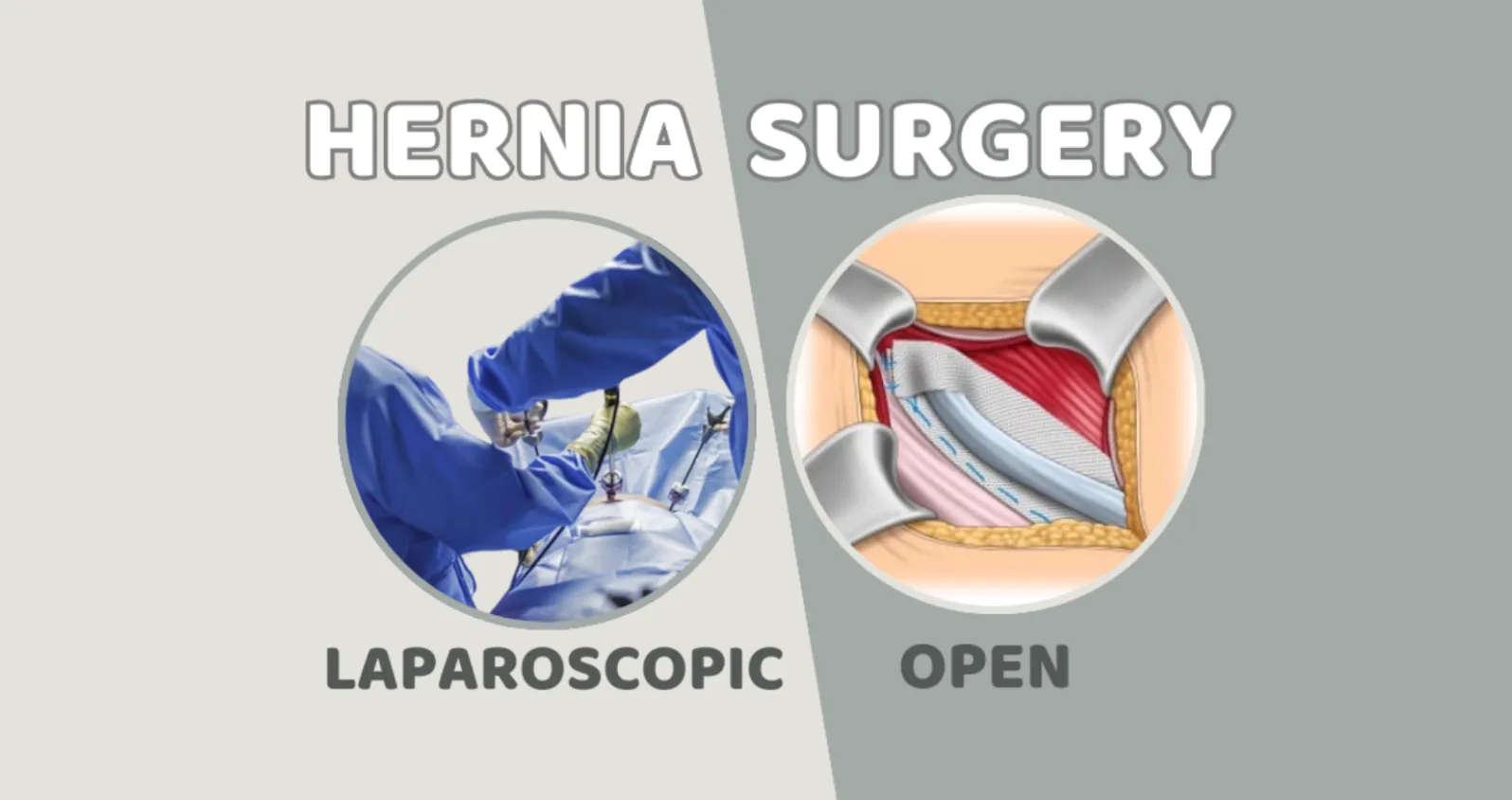
Keyhole or Large Cut? Laparoscopic vs. Open Surgery: Which One Suits Your Hernia Repair Best?
For most patients, Laparoscopic Hernia Repair (or keyhole surgery) is the preferred choice, offering a significantly faster recovery time, less post-operative pain, and smaller scars. However, Open Hernia Surgery remains the gold standard for very large, incarcerated, or complex recurrent hernias. The best option depends on your hernia type (inguinal, umbilical, etc.), size, overall health, and the surgeon’s expertise.
Introduction: The Two Paths to Hernia Repair
A hernia, a common condition where an organ or fatty tissue squeezes through a weak spot in a surrounding muscle or connective tissue, often requires surgical repair. If you or a loved one is facing this procedure, you will likely encounter two primary choices: Open Surgery (traditional repair) and Laparoscopic Hernia Surgery (minimally invasive).
The decision between these two techniques—a single, larger incision versus several tiny “keyholes”—is one of the most critical factors influencing your hernia recovery time, pain level, and return to normal life. This comprehensive guide will break down the pros, cons, and key factors to help you and your specialist determine the optimal approach for your specific condition.
1.The Laparoscopic (Keyhole) Approach: Faster Recovery, Less Pain
Laparoscopy represents a modern surgical revolution. It is technically more demanding but offers substantial patient benefits, especially for an inguinal hernia repair or bilateral hernias (hernias on both sides).
The Procedure:
The surgeon makes 3 to 4 tiny incisions (each about 0.5 cm to 1 cm) near the hernia site. A laparoscope (a thin tube with a camera) and specialized instruments are inserted. The surgeon works inside the abdomen, pushing the herniated tissue back into place and reinforcing the muscle wall with a synthetic surgical mesh from the inside.
Key Advantages:
* Significantly Faster Recovery: Most patients return to light activities and desk work within 1 to 2 weeks, compared to 4–6 weeks for open surgery.
* Minimal Scarring: The small incisions heal into barely noticeable marks.
* Less Post-Operative Pain: Due to minimal muscle and tissue trauma, patients typically require fewer narcotic painkillers and have less overall pain.
* Ideal for Bilateral Hernias: Both sides can be repaired through the same keyhole incisions without creating two large groin wounds.
* Excellent for Recurrence: Often the preferred method for a hernia that has recurred after a previous open repair.
Key Disadvantages:
* Requires General Anaesthesia: Unlike some open procedures, laparoscopy always requires general anaesthesia.
* Higher Upfront Cost: Due to specialized equipment and the need for higher-skilled surgical teams, the procedure tends to be more expensive (Check cost comparison section below).
2.The Open (Traditional) Approach: Tried-and-True Strength
The Open Hernia Repair method has been the traditional standard for decades. It is a time-tested technique that is versatile and highly effective.
The Procedure:
The surgeon makes a single, longer incision (typically 3–6 inches) directly over the hernia site. The tissue is isolated, pushed back into the abdominal cavity, and the weakened muscle layer is directly stitched (suture repair) or, more commonly, reinforced with a surgical mesh (a technique known as hernioplasty or Lichtenstein repair).
Key Advantages:
* Versatility for Complex Cases: The direct visualization and access make it ideal for very large, strangulated, incarcerated (trapped) hernias, or in patients with previous abdominal surgeries and internal scarring.
* Option for Local Anaesthesia: In some cases, particularly in older patients or those with certain health concerns, the surgery can be performed under local or spinal anaesthesia.
* Lower Surgical Cost: Generally, less expensive than the laparoscopic option.
* Wider Availability: As the standard technique, it is more widely available across all surgical centres.
Key Disadvantages:
* Longer Recovery Time: Patients usually require 4 to 6 weeks before they can resume strenuous activities and heavy lifting.
* More Pain: The larger incision involves more tissue manipulation, leading to greater post-operative pain.
* Larger Scar: A more noticeable scar remains at the incision site.
3.Which Method Suits Your Hernia Repair Best?
The ‘better’ choice is highly individualized. A specialist surgeon will consider these factors:
Factors of Laparoscopic Repair Open Repair:
Type of Hernia: Best for Inguinal Hernia (unilateral & bilateral) and Incisional. | Often preferred for large Umbilical, Hiatal, and large Femoral hernias. |
Recurrence: Generally, the preferred method for Recurrent Hernia (after a previous open repair). The first repair is often open; preferred if the recurrence is after a previous laparoscopic repair.
Recovery Goal: Primary goal is Quick Return to Work and sports. | Primary goal is repairing strength for complex or very large defects.
Anaesthesia: Always requires General Anaesthesia. | Can be performed under Local, Spinal, or General Anaesthesia.
Surgeon Skill: Requires a high degree of technical skill and laparoscopic expertise. Standard surgical skill set.
The Consensus: For uncomplicated, primary hernias (especially inguinal), the low-pain, quick-recovery benefits of the laparoscopic approach often make it the first choice. However, for the very elderly, those with severe heart or lung conditions, or those with very large hernias, the open approach may be safer.
Cost Comparison in Major Cities;
While laparoscopic surgery is often cited as more expensive due to equipment, the reduced hospital stays and faster return to work can offset the overall cost. Below is an approximate cost range comparison for a standard hernia repair in [Target City/Region for GEO-Targeting – e.g., Delhi NCR, Chennai, Bangalore, Mumbai, etc.].
Open Hernia Repair ₹ 35,000 – ₹ 80,000 4–6 weeks
Laparoscopic Hernia Repair ₹ 60,000 – ₹ 1,20,000 1–2 weeks
Conclusion: Partner with Your Specialist
The evolution of laparoscopy has been a game-changer, making a fast recovery from hernia surgery a reality for millions.
The key takeaway is this: Do not choose your surgery based on cost or speed alone. Schedule a detailed consultation with a certified general surgeon who is proficient in both open and laparoscopic hernia repair techniques in your local area (e.g., Best Laparoscopic Surgeon in [Target Location]). Your specialist will conduct a thorough physical examination, discuss your lifestyle needs (are you an athlete or do you have a desk job?), and recommend the safest and most effective method for your specific hernia.