Living with a hernia can raise plenty of questions, especially when a simple bulge starts causing pain or making everyday activities uncomfortable. Thankfully, hernia repair is a commonly performed procedure, and modern surgical techniques offer effective treatment for many patients.
The general rule is simple: keep moving, protect your wound, avoid constipation and gradually increase activity. You usually don’t need prolonged bed rest, but heavy lifting and strenuous exercise should be avoided until your surgeon says you’re ready.
If you’ve undergone surgery with a best hernia surgeon, your surgeon’s specific instructions should always take priority because recovery can differ depending on whether the repair was laparoscopic or open and on your overall health.
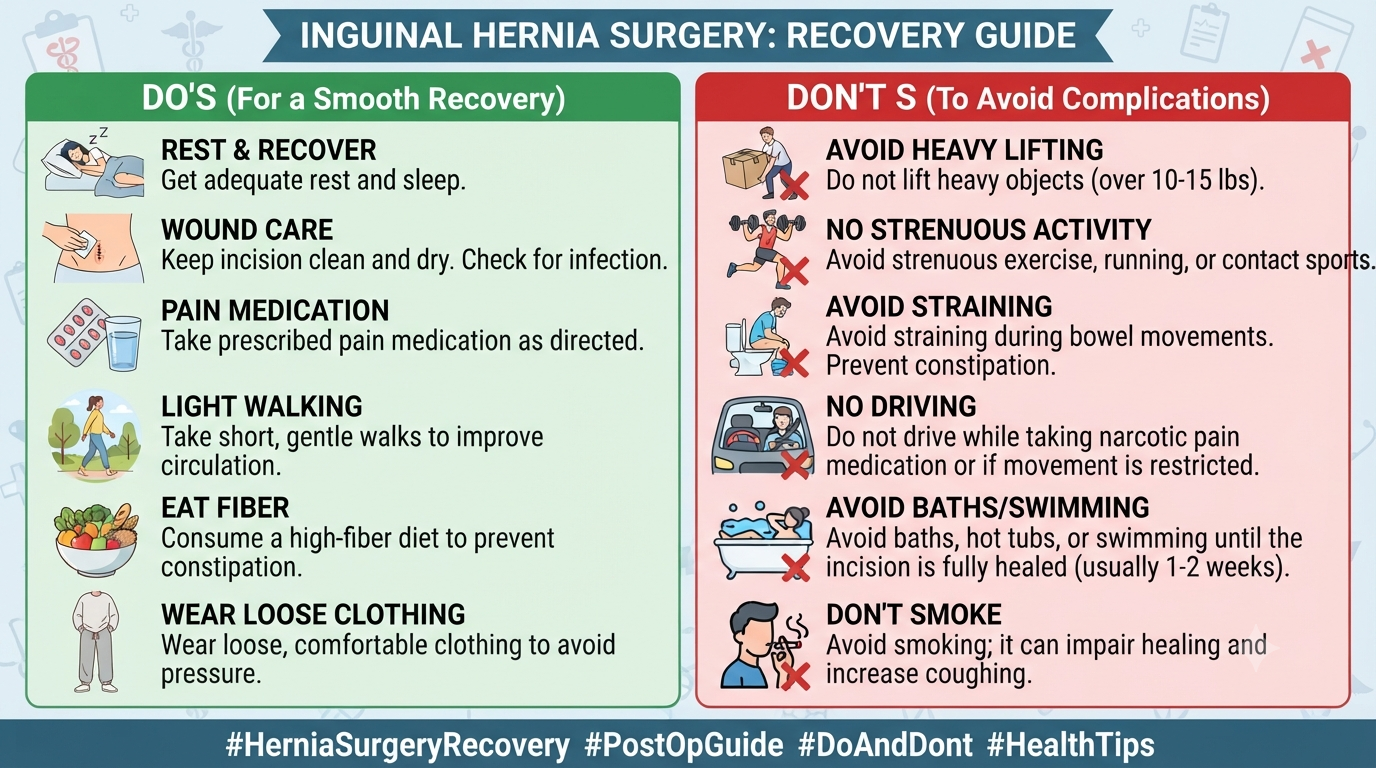
Quick Do’s
- Walk gently and increase activity gradually
- Drink plenty of fluids and eat fibre-rich foods
- Keep the surgical wound clean and dry
- Take prescribed pain medication as advised
- Get enough rest, especially during the first few days
Quick Don’ts
- Don’t lift heavy objects or rush into strenuous exercise
- Don’t strain while passing stool
- Don’t ignore increasing pain, fever or wound discharge
- Don’t drive until you can safely perform an emergency stop
- Don’t smoke, and avoid alcohol while taking medicines that interact with it
Understanding Inguinal Hernia Surgery Recovery
Inguinal hernia repair closes the weakness in the abdominal wall where the hernia has developed. Depending on your case, the repair may be performed through an open approach or laparoscopically.
Most people can return to light daily activities within a few days, while overall recovery commonly takes around 4–6 weeks. Your actual timeline depends on the type of surgery, your general health, the nature of the hernia and the physical demands of your job.
Do’s After Inguinal Hernia Surgery
Do Walk Early and Often
You generally don’t need to stay in bed after surgery. Once you’re comfortable, gentle walking around your home is encouraged.
Walking improves circulation and helps reduce the risk of blood clots. Start with short walks and gradually increase the distance as your comfort improves.
Do Follow a High-Fiber Diet
Constipation can make recovery uncomfortable because straining puts additional pressure on the abdominal area.
Include fibre-rich foods such as fruits, vegetables, oats, whole grains and wholemeal bread, and drink plenty of fluids. If your doctor has prescribed a laxative or stool softener, take it as advised.
Do Practice Proper Wound Care
Follow the instructions given by your surgical team for keeping the incision clean and dry. Some patients can shower within a day or a few days, depending on the dressing and surgical instructions.
Mild bruising, swelling, itching, numbness or a firm feeling around the wound can occur during normal healing. Increasing redness, swelling, pain, discharge or persistent bleeding needs medical attention.
Do Manage Pain and Bowel Movements
Take your pain medication exactly as prescribed rather than waiting until discomfort becomes difficult to control.
If you need to cough or sneeze, gently supporting the wound with your hand can make it more comfortable. Keeping your stools soft also helps you avoid unnecessary straining.
Do Get Adequate Rest
You may feel tired for the first few days, particularly after a general anaesthetic. Rest when you need to, but don’t spend the entire day in bed.
Short periods of walking followed by rest are generally more useful than prolonged inactivity.
Don’ts After Inguinal Hernia Surgery
Don’t Lift Heavy Objects
Heavy lifting puts additional stress on the healing abdominal wall.
The exact restriction varies between procedures and surgeons. Some guidance recommends avoiding heavy lifting or strenuous activity for several weeks, so don’t assume you’re ready simply because the incision feels better. Follow your surgeon’s individual timeline.
Don’t Rush Back to Exercise
Walking is encouraged early, but that doesn’t mean you’re ready for the gym.
Avoid jumping straight into sit-ups, crunches, heavy deadlifts, leg raises or other strenuous exercises. Gradually build your activity back up, and stop if an exercise causes pain or discomfort.
Don’t Ignore Warning Signs
Some discomfort, bruising and swelling can be part of normal recovery. What matters is whether symptoms are gradually improving.
Contact your surgical team if you develop a fever, persistent vomiting, increasing abdominal pain or swelling, wound redness or discharge, significant bleeding, or difficulty passing urine.
Don’t Strain or Push Yourself
Avoid activities that make you strain or significantly increase discomfort during the early recovery period.
You can gradually return to normal movements as you feel comfortable, but if lifting or another activity causes pain, stop and give your body more time to recover.
Don’t Smoke or Drink Alcohol Carelessly
Smoking can interfere with wound healing, so staying smoke-free after surgery is recommended.
Alcohol should also be avoided while you’re taking medicines that interact with it. After a general anaesthetic, some NHS guidance recommends avoiding alcohol for at least two days.
What to Wear After Inguinal Hernia Surgery
Choose loose, comfortable clothing that doesn’t press tightly against the groin or surgical area.
Supportive underwear may also feel more comfortable, particularly if you have swelling or bruising. Some hospitals specifically recommend close-fitting underwear for additional support during the early recovery period.
Can a Hernia Come Back After Surgery?
Yes, a hernia can come back after repair, although recurrence isn’t inevitable.
The risk depends on factors such as the type of hernia, surgical technique, tissue quality and individual health factors. Following your surgeon’s recovery instructions, avoiding smoking and gradually returning to strenuous activity can support a safer recovery.
Hernia Surgery Recovery Timeline
| Recovery stage | What you may be able to do |
| First few days | Rest, walk around the house and manage pain as advised |
| Week 1–2 | Gradually increase everyday activity; some people return to desk work |
| Week 2–4 | Increase walking and light activity according to comfort and surgical advice |
| Week 4–6 | Gradually return to more strenuous activity if your surgeon approves |
| After 6 weeks | Many patients can return to unrestricted activity, depending on their recovery and procedure |
These are general guidelines rather than fixed rules. Some laparoscopic repairs allow an earlier return to activity, while open repairs or physically demanding jobs may require more time.
Frequently Asked Questions
How much bed rest after hernia surgery?
You usually don’t need prolonged bed rest. Rest more during the first day or two, but gentle walking is encouraged as soon as you’re comfortable.
When can I exercise after hernia surgery?
Walking can usually begin early, while strenuous exercise should wait until your surgeon clears you. Depending on the repair, heavier exercise may need to wait several weeks.
How long does the pain last after hernia surgery?
Pain is usually most noticeable during the first few days and should gradually improve. Some tenderness or discomfort can continue for several weeks, but worsening or uncontrolled pain should be assessed.
Can I climb stairs after hernia surgery?
Yes, gentle stair climbing is generally possible when you feel comfortable. Take it slowly and avoid carrying heavy items while using the stairs during early recovery.
Can you drink beer after hernia surgery?
Avoid alcohol for at least the period advised after anaesthesia, and don’t drink while taking medicines that interact with alcohol. Follow your surgeon’s specific instructions.
Will I lose weight after hernia surgery?
Usually, no. Hernia surgery repairs the abdominal-wall weakness rather than directly causing weight loss. Maintaining a healthy weight after recovery can, however, be beneficial for your overall health.
When to See Your Doctor
Recovery should generally move in the right direction over time. If pain, swelling or other symptoms are becoming worse instead of better, it’s worth contacting your surgical team.
For personalised guidance and follow-up after hernia surgery, consult Dr. Preethi Mrinalini K to discuss your recovery and treatment needs.
Seek prompt medical attention for fever, persistent vomiting, severe or increasing abdominal pain, significant wound bleeding, redness or pus-like discharge, marked swelling, or difficulty passing urine.