
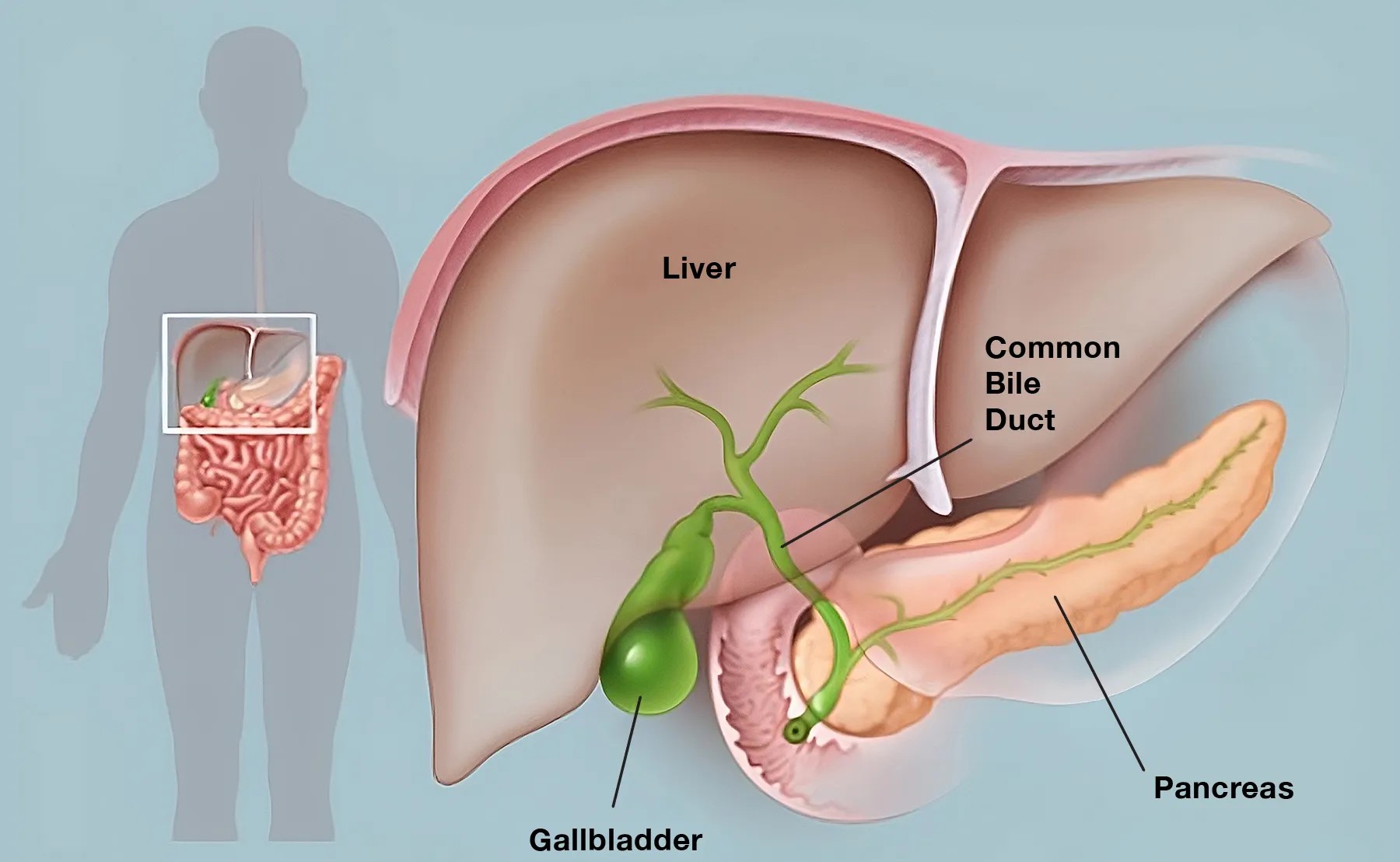
A sudden, sharp pain in the upper right side of your belly, often after a heavy meal, can be frightening. For many people, gallbladder stones turn out to be the reason. Yet many others carry these stones for years without ever knowing.
This guide explains gallbladder stones (also called gallstones or gall bladder stones) in plain language: what they are, which symptoms to look for, what causes them, how doctors find them, and how they are treated.
What Are Gallbladder Stones?
Your gallbladder is a small, pear-shaped organ tucked under your liver on the upper right side of your abdomen. It stores bile, a digestive fluid made by the liver that helps break down fats. When you eat, the gallbladder squeezes bile into the small intestine.
Gallbladder stones are hard, pebble-like lumps that form inside the gallbladder. According to the National Institute of Diabetes and Digestive and Kidney Diseases (NIDDK), they can be as small as a grain of sand or as large as a golf ball. You may have one large stone, hundreds of tiny ones, or a mix. Doctors sometimes call the condition cholelithiasis.
There are two main types:
- Cholesterol stones: yellow-green and made mostly of hardened cholesterol. This is the most common type.
- Pigment stones: dark in color and made of bilirubin, a substance produced when red blood cells break down.
How common are gallbladder stones?
Gallstones affect about 10 to 15 percent of people in the United States. In India, how common they are varies from region to region, and they are more common in women. In one recent community study, rates ranged from 0.3 percent to about 10.8 percent across the places surveyed.
Gallbladder Stones Symptoms
Most gallbladder stones cause no symptoms at all. These are called silent stones. They do not stop the gallbladder, liver or pancreas from working, and they usually do not need treatment. Many are found by chance during a scan done for another reason.
Symptoms begin when a stone blocks a duct, one of the tubes that carry bile. This causes a gallbladder attack, also called biliary colic. Common signs include:
- Sudden pain in the upper right part of the abdomen that quickly gets stronger
- Pain in the center of the abdomen, just below the breastbone
- Pain in the back, between the shoulder blades
- Pain in the right shoulder
- Nausea or vomiting
Gallbladder stone pain can last from several minutes to a few hours. Attacks often follow a heavy meal and commonly happen in the evening or at night. The pain usually eases when the stone moves and stops blocking the duct. But if you have had one attack, more are likely to follow, so it is worth getting checked.
Other problems, such as ulcers, acid reflux, pancreatitis and appendicitis, can feel similar. That is why it is best not to assume the cause.
When to Get Medical Help Urgently
Seek care right away if a gallbladder attack comes with any of these:
- Pain that lasts several hours, or is so intense you cannot sit still
- Nausea and vomiting
- Fever, even a mild one, or chills
- Yellow skin or yellow whites of the eyes (jaundice)
- Dark, tea-colored urine or pale stools
These can be signs of infection or inflammation in the gallbladder, liver or pancreas, which need prompt treatment.
Gallbladder Stones Causes and Risk Factors
Doctors do not fully understand why stones form. They think it happens when:
- Bile contains too much cholesterol. If the liver releases more cholesterol than bile can dissolve, the extra can form crystals and then stones.
- Bile contains too much bilirubin. Certain liver, blood and bile duct conditions can cause this.
- The gallbladder does not empty well. Bile then becomes concentrated, which can lead to stones.
You are more likely to develop gallbladder stones if you:
- Are a woman, are 40 or older, or have a family history of gallstones
- Are overweight or obese, or do little physical activity
- Are pregnant, or take medicines containing estrogen, such as birth control pills or hormone therapy
- Lose weight very quickly, including after weight-loss surgery or on very low-calorie diets
- Eat a diet high in fat, cholesterol or refined carbohydrates and low in fiber
- Have diabetes, liver disease, or a blood disorder such as sickle cell anemia
Having risk factors does not mean you will develop stones, and some people with none still do.
Possible Complications
Silent stones rarely cause harm. Problems arise when a stone blocks a duct for too long:
- Cholecystitis: inflammation of the gallbladder, which can cause severe pain and fever.
- Bile duct blockage: this can cause severe pain, jaundice and infection.
- Gallstone pancreatitis: a blockage near the pancreas can inflame it, causing intense, constant pain that usually needs hospital care.
People with a history of gallstones also have a higher risk of gallbladder cancer. But it is very rare, so the chance remains very small.
How Gallbladder Stones Are Diagnosed
Your doctor will ask about your symptoms, health history, family history and diet, and will examine your abdomen. You may then need:
- Blood tests to look for signs of infection or inflammation in the gallbladder, bile ducts, liver or pancreas.
- A gallbladder ultrasound, the best imaging test for finding gallstones. It uses safe, painless sound waves.
- Other scans, such as a CT scan, MRI or HIDA scan, when the picture is unclear. A CT scan can miss some stones, and an MRI can show stones in the bile ducts.
- ERCP, a more involved test that combines an endoscope and X-rays. It is used selectively, usually to remove a stone stuck in the main bile duct.
Gallbladder Stone Treatment
Treatment depends on whether the stones cause symptoms.
Silent stones. If you have no symptoms, you probably do not need treatment. Your doctor can tell you what to watch for.
Surgery. If stones cause symptoms, the usual treatment is surgery to remove the gallbladder, called cholecystectomy. It is one of the most common operations in adults. Most surgeons use keyhole (laparoscopic) surgery through small cuts. Many are done as day cases, and most people return to normal physical activity in about a week. Open surgery, with a larger cut, is used if the gallbladder is badly inflamed, infected or scarred. It can mean up to a week in hospital and about a month before normal activity.
Life without a gallbladder. The gallbladder is not an essential organ, and you can live normally without it. Bile flows straight from the liver into the small intestine. A small number of people have softer, more frequent stools afterward, which is usually temporary. Complications are very rare, but it is fine to ask your surgeon about the risks.
Medicines and other non-surgical options. These are used only in special situations, such as cholesterol stones in someone who cannot have surgery. Medicines like ursodiol can take months or years to break up small cholesterol stones, and stones can come back. Pigment stones usually need surgery.
What about gallbladder cleanses? Mayo Clinic says there is no reliable evidence that gallbladder cleanses or flushes work. They can also cause nausea, vomiting, diarrhea and pain. What looks like stones afterward is usually oil and juice.
Gallbladder Stone Diet and Prevention
Diet can lower your risk of gallbladder stones, but it cannot be relied on to remove stones you already have. Experts suggest:
- Eat more fiber: fruits, vegetables, beans, peas and whole grains such as brown rice, oats and whole wheat.
- Cut back on refined carbohydrates and sugar.
- Choose healthy fats, such as olive oil and fish, over the fats in fried foods and desserts.
- Do not skip meals. Try to keep to regular mealtimes.
- Lose weight slowly, about 0.5 to 1 kg a week, because rapid weight loss raises the risk.
- Stay active and aim to maintain a healthy weight.
If you already have symptoms, talk to your doctor before making big changes to what you eat.
Common Questions
Can gallbladder stones go away on their own?
The pain of an attack often settles when a stone moves, but that does not mean the stones are gone. Attacks are likely to return, so symptoms should be checked.
Are gallstones dangerous?
Silent stones usually are not. Stones that block a duct can cause serious complications if left untreated, which is why symptoms should not be ignored.
Do I need surgery if stones are found by chance?
Usually not. If they cause no symptoms, treatment is not normally needed.
What size of gallbladder stone needs surgery?
Stones range from a grain of sand to a golf ball. Whether you need treatment depends mainly on whether they cause symptoms or complications, not on size alone, so your doctor will look at the whole picture.
Speak With a Doctor About Your Symptoms
If you have had pain in the upper right abdomen, or gallbladder stones have been found on a scan and you are unsure what to do next, a consultation can help you understand your options. Marina’s Clinic is a gastrointestinal clinic led by chief consultant surgeon Dr. Preethi Mrinalini K, where patients are seen for gallbladder problems, piles, fissures, hernias and other digestive conditions. To arrange an assessment, visit marinasclinic.com and book an appointment.