
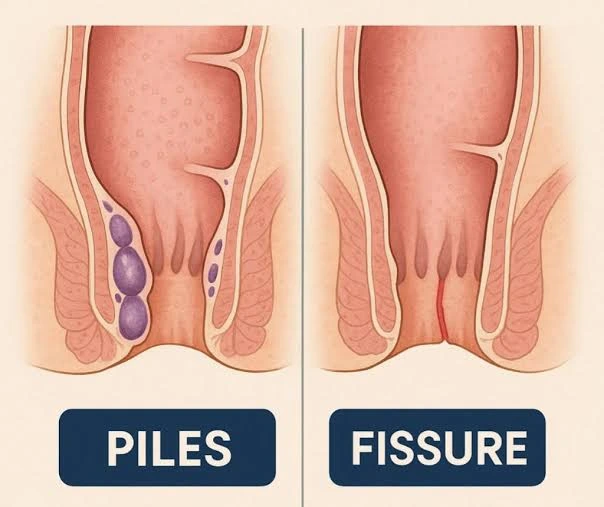
Bleeding after a bowel movement, pain that makes you dread going to the toilet, a small lump you weren’t expecting: these symptoms are hard to ignore, and just as hard to make sense of. Piles and anal fissures are two of the most common causes, and they overlap enough that people often mistake one for the other.
They are different problems, though, and they are treated differently. Piles are swollen veins. A fissure is a small tear. Knowing which one you may be dealing with helps you choose sensible next steps and describe your symptoms clearly to a doctor. This guide explains the difference between piles and fissure in plain terms, including the clues that set them apart and when it is time to get checked.
Piles vs Fissure at a Glance
In an anal fissure vs hemorrhoids comparison, the quickest clue is pain. Piles often cause bleeding, itching or a lump with little pain, while a fissure typically causes sharp, burning pain during and after a bowel movement. The two overlap, so only an examination can say for certain.
| Piles (hemorrhoids) | Anal fissure | |
| What it is | Swollen veins in or around the anus | A small tear in the anal lining |
| Main symptom | Bleeding, lump, itching, pressure | Sharp or burning pain with bowel movements |
| Pain | Often mild or absent; external piles can be tender | Usually sharp; can last minutes to hours afterwards |
| Bleeding | Bright red, on paper or in the bowl | Usually small streaks of bright red blood on paper |
| Lump | A soft lump is common | Usually none; a small skin tag can form |
| Common triggers | Straining, long spells on the toilet, pregnancy | Hard stools, diarrhoea, childbirth |
What Are Piles?
Piles, also called hemorrhoids, are swollen veins in the lower rectum and around the anus. Internal piles form inside the rectum. They are often painless but may bleed. External piles form under the skin around the anus and are more likely to itch, swell or feel tender. If a blood clot forms inside an external pile, it can cause a sudden, hard, painful lump.
Piles build up when pressure on these veins increases over time. Straining, constipation, long periods on the toilet, pregnancy and a low-fibre diet are common contributors.
What Is an Anal Fissure?
An anal fissure is a small tear in the lining of the anal canal, a bit like a paper cut in a place that is opened many times a day. It usually starts when a hard or large stool stretches the lining, though frequent loose stools and childbirth can also cause one.
Most fissures are painful, and the pain has a recognisable pattern. The NHS describes severe, sharp pain during a bowel movement, followed by a burning pain that can last for several hours. The tear can also set off a spasm in the muscle around the anus, which makes the pain worse and slows healing. Fissures are most common in people aged 15 to 40 and in young children.
Four Clues That Help Tell Piles From a Fissure
Piles and fissure symptoms overlap, but these four clues can point you in the right direction.
- When the pain happens. Pain that flares sharply with each bowel movement and then lingers points more towards a fissure. A dull ache, pressure or itching that comes and goes points more towards piles. Some people with a fissure start to dread going to the toilet, which can lead to constipation and a longer cycle of pain.
- What the bleeding looks like. Both can cause bright red blood. With a fissure, it is usually a small streak on the tissue. Piles may bleed more noticeably, sometimes dripping into the bowl. Colour and amount are only rough guides, and dark or unusual blood always deserves a check.
- Whether there is a lump. A soft lump near the anus is more typical of piles. A fissure is usually a tear you cannot feel as a lump, though a long-standing one may develop a small skin tag beside it.
- How long it has lasted. A new fissure often improves within days to a few weeks. One that lasts longer than about eight weeks is called a chronic fissure and usually needs medical treatment. Piles tend to flare and settle, and can come back if the habits behind them continue.
Fissure vs Piles: When It Could Be Both, or Something Else
Straining can cause piles and a fissure at the same time, so having one does not rule out the other.
A long-standing fissure can also form a sentinel pile, a small skin tag at its lower edge. It feels like a pile but is really part of the fissure, which is one reason guessing can lead to the wrong treatment.
Other conditions can look similar. Fissure vs fistula is another common mix-up: an anal fistula, a small tunnel between the anal canal and the skin, tends to cause pus or discharge, recurring swelling and pain. Rectal bleeding can also come from other causes in the bowel. Doctors pay particular attention to a fissure that sits away from the usual midline position, because it can sometimes point to an underlying condition such as inflammatory bowel disease. In people over 50, or anyone with warning signs such as weight loss or changes in bowel habits, new bleeding is usually investigated further even when a fissure is found.
When to See a Doctor
Book an assessment if:
- Bleeding keeps coming back or continues after a week of home care
- Pain is severe, or a fissure has not healed after several weeks
- A lump is painful, hard or growing
- You notice pus, discharge or fever
- Your bowel habits change, your stools look dark, or you lose weight without trying
- You are over 40 and bleeding for the first time
Heavy bleeding, dizziness or faintness needs urgent medical care.
A fissure is usually diagnosed by looking at the area. If an internal examination would be too painful, a good doctor will keep it gentle and may avoid it in the first visit.
How Piles and Fissures Are Treated
The first steps overlap. Both respond to more fibre, plenty of fluids, softer stools, less straining and warm sitz baths. Around half of fissures heal with fibre and warm baths alone, and many mild piles settle in a similar way.
If a fissure does not heal, treatment focuses on relaxing the tight muscle so the tear can close. Options include prescription ointments, a botulinum toxin injection, or a small procedure to release the muscle. For piles that keep causing symptoms, options range from rubber band ligation and laser treatment to stapled or excisional surgery, depending on the grade. Which medicine or procedure is right depends on the diagnosis, which is another reason not to guess.
Common Questions
Can you have piles and a fissure at the same time?
Yes. Both are linked to straining and hard stools, so they can occur together. If you have sharp pain with a lump and bleeding, an examination can show whether one or both are present. Treating only one may leave symptoms behind.
Can an anal fissure heal on its own?
Often, yes. Many new fissures heal within a few weeks with more fibre, fluids and warm sitz baths. A fissure that is still painful or bleeding after about eight weeks is considered chronic and may need prescription treatment or a minor procedure. Persistent symptoms should not simply be waited out.
Which doctor should you see for piles or a fissure?
A general physician, gastroenterologist or general or colorectal surgeon can all examine you. A physician or gastroenterologist can confirm the cause and start treatment. A surgeon is the right choice if a fissure is chronic, piles are large, or a procedure may be needed.
Speak With a Doctor About Your Symptoms
Pain and bleeding in this area are uncomfortable to talk about, but a clear diagnosis usually makes the next step simple. If you are unsure whether you are dealing with piles, a fissure or something else, an examination can replace guesswork with answers. Marina’s Clinic is a gastrointestinal clinic led by chief consultant surgeon Dr. Preethi Mrinalini K, where patients are seen for piles, fissures, hernias and other digestive conditions. To arrange an assessment, visit marinasclinic.com and book an appointment.