
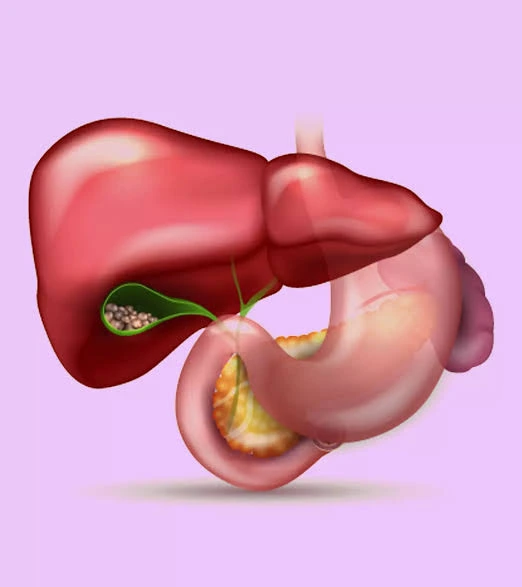
Gallstones are often associated with adults, but children and teenagers can develop them too. They are still relatively uncommon in childhood, although diagnoses have increased in recent years.
Sometimes, the signs aren’t obvious. A child may simply complain about repeated stomach pain, feel sick after meals, or start avoiding certain foods. These symptoms can easily be mistaken for an ordinary stomach problem.
Understanding the possible signs and knowing when medical attention is needed can help parents make the right decision.
Why Do Gallstones Happen in Children?
Gallstones form when substances in bile become unbalanced and solid particles develop inside the gallbladder.
There are two broad types:
| Type of gallstone | More commonly seen in | Common associations |
| Cholesterol stones | Teenagers | Obesity, rapid weight loss, high-fat diet and family history |
| Pigment stones | Younger children and children with certain conditions | Sickle cell disease and other conditions causing increased red blood cell breakdown |
Having one of these risk factors does not mean a child will definitely develop gallstones. However, knowing the risk factors can help parents and doctors investigate recurring symptoms more carefully.
Common Risk Factors in Children
A child’s chances of developing gallstones may be higher when they have:
- Obesity or a high BMI for their age
- A family history of gallstones
- Sickle cell disease or thalassemia
- Other conditions that cause ongoing red blood cell breakdown
- Crohn’s disease or cystic fibrosis
- Certain long-term medications
- Rapid weight loss
- Being an adolescent girl, as gallstones are somewhat more common in teenage girls
These factors are useful clues, particularly when a child has unexplained or recurring abdominal symptoms.
What Symptoms Should Parents Watch For?
The symptoms can look different depending on the child’s age.
Symptoms in Teenagers
Teenagers can often describe their symptoms more clearly. They may experience:
- Pain in the upper-right or upper-middle abdomen
- Pain that occurs after eating, particularly after a fatty meal
- Pain that may spread toward the back or shoulder blade
- Nausea
- Vomiting
- Repeated episodes of abdominal discomfort
The pain may come and go, which can sometimes make it difficult to identify the underlying cause.
Symptoms in Younger Children
Younger children may not be able to explain exactly where or why they are hurting.
Instead, parents may notice:
- Repeated complaints of stomach pain
- Reduced appetite
- Irritability
- Avoiding certain foods
- Nausea or vomiting
- Changes in normal eating habits
Because these symptoms can occur with many common childhood illnesses, gallstones may not be the first thing parents think of.
When Should You Seek Urgent Medical Care?
Certain symptoms should not be ignored.
Seek prompt medical attention if your child develops:
- Severe or worsening abdominal pain
- Fever along with abdominal pain
- Persistent vomiting
- Yellowing of the skin or eyes
- Dark urine
- Unusually pale stools
- Pain that spreads toward the back
These symptoms can sometimes indicate complications involving the gallbladder, bile ducts or pancreas.
How Are Gallstones Diagnosed in Children?
The doctor will usually begin by asking about the child’s symptoms, medical history and family history, followed by a physical examination.
An abdominal ultrasound is generally the main imaging test used to look for gallstones. It is non-invasive, does not involve radiation and can identify stones within the gallbladder.
Depending on the child’s symptoms, doctors may also recommend blood tests to look for signs of:
- Infection
- Inflammation
- Bile duct problems
- Liver-related abnormalities
- Other complications
More detailed imaging may sometimes be required, but it isn’t necessary in every child.
What Are the Treatment Options?
Treatment depends largely on whether the gallstones are causing symptoms or complications.
| Situation | Possible approach |
| Gallstones found accidentally with no symptoms | Monitoring and follow-up may be appropriate |
| Repeated symptoms | Surgical treatment may be considered |
| Complications | Prompt specialist treatment may be required |
| Stone in the bile duct | Endoscopic removal may be needed |
| Certain high-risk conditions | Closer monitoring or surgery may be recommended |
1. Watchful Waiting
If gallstones are discovered accidentally and the child has no symptoms, immediate surgery may not always be necessary.
Doctors may recommend observation and follow-up, particularly when there are no additional risk factors for complications.
2. Laparoscopic Gallbladder Removal
When gallstones cause repeated symptoms or complications, laparoscopic cholecystectomy, or minimally invasive gallbladder removal, is commonly used.
The procedure is performed through several small incisions rather than one large incision. It is an established treatment for symptomatic gallstones in children and generally involves a relatively short hospital stay.
3. Medication
In selected situations, medication may be considered to gradually dissolve certain cholesterol stones.
However, this approach has limitations:
- It does not work for pigment stones
- Treatment can take many months
- Stones can return after treatment is stopped
- It is generally reserved for specific situations
If a gallstone has moved into the bile duct, a specialist may need to perform an endoscopic procedure to remove it.
Gallstones and Sickle Cell Disease
Children with sickle cell disease and other conditions that cause ongoing red blood cell breakdown have a higher risk of developing pigment gallstones.
For these children, doctors may recommend regular monitoring, including ultrasound examinations where appropriate.
If symptoms or complications develop, treatment is usually considered promptly. Decisions about removing symptom-free gallstones should be made with a specialist who understands the child’s underlying condition.
What Is Recovery Like After Gallbladder Surgery?
Children generally recover relatively quickly after laparoscopic gallbladder removal.
Many can:
- Go home the same day or after an overnight stay
- Manage mild discomfort with appropriate pain relief
- Return to school once they feel comfortable
- Gradually return to sports and physical activities
- Resume a normal diet over time
The exact recovery period depends on the child’s health and the procedure performed.
Most children can digest food normally after gallbladder removal and do not require permanent dietary restrictions.
Can Gallstones Be Prevented?
Not every case of gallstones can be prevented. Genetics, medical conditions and other factors can play an important role.
For children who are overweight or at higher risk, healthy habits can still help.
These include:
- Maintaining a healthy weight
- Eating a balanced diet
- Staying physically active
- Avoiding very rapid weight loss
- Following medical advice for underlying conditions
For children with conditions such as sickle cell disease, regular medical monitoring may be particularly important.
When Should You Talk to a Doctor?
A single episode of stomach pain does not necessarily mean your child has gallstones.
However, recurring abdominal pain deserves attention, especially if it is associated with meals or accompanied by nausea, vomiting or food avoidance.
It’s worth speaking with your child’s doctor if you notice:
- Repeated abdominal pain
- Unexplained nausea or vomiting
- Consistent avoidance of fatty foods
- A family history of gallstones
- A known blood disorder or other risk factor
Early evaluation can help determine whether gallstones are actually responsible and whether treatment is needed.
The Bottom Line
Gallstones can occur in children and teenagers, even though they are less common than in adults. The symptoms can be subtle, particularly in younger children, so recurring abdominal complaints shouldn’t always be dismissed as ordinary stomach aches.
The good news is that gallstones can usually be identified with appropriate evaluation, and several treatment options are available depending on the child’s symptoms and individual risk.
If your child is experiencing recurring abdominal pain or has been diagnosed with gallstones, speak with a qualified doctor to understand the cause and determine whether monitoring or treatment is appropriate.