
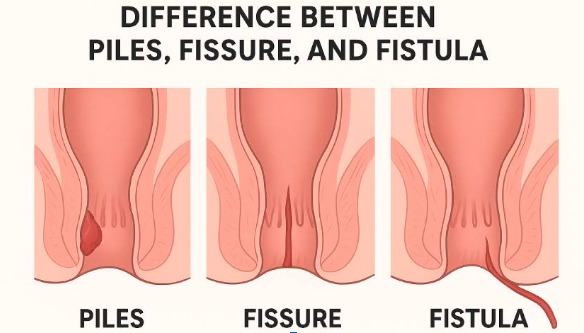
Many people experience discomfort, pain, or bleeding in the anal region but often struggle to understand the actual cause. Is it piles? A fissure? Or could it be a fistula? While these conditions may share similar symptoms, they are entirely different medical problems that require different treatment approaches.
Piles, Fissures, and Fistulas: Understanding the Differences
Few health concerns create as much discomfort and confusion as problems affecting the anal and rectal region. Many people experience symptoms such as pain while passing stools, bleeding, swelling, or irritation but often assume they are all caused by the same condition. The truth is that piles, fissures, and fistulas are three distinct disorders, each with its own causes, symptoms, and treatment options.
Understanding the differences between piles, fissures, and fistulas is the first step toward receiving the right treatment and finding lasting relief.
What Are Piles?
Piles, also known as hemorrhoids, are swollen veins located in the lower rectum or around the anus. They develop when excessive pressure causes these veins to enlarge and become inflamed.
Many factors contribute to the development of piles. Chronic constipation, prolonged sitting, obesity, pregnancy, and straining during bowel movements are among the most common causes.
One of the commonest symptoms associated with piles is painless bleeding when passing stool. A patient may see fresh red blood on the tissue or in the bowl. In advanced cases of piles, patients also suffer from symptoms like itching, irritation, swelling, and pain around the anus.
In some cases, the hemorrhoids stay within the body and cannot be seen, while in others, the external hemorrhoids can be felt and may even lead to pain when blood clots form within them.
What Is an Anal Fissure?
Unlike piles, an anal fissure is not caused by swollen veins. Instead, it is a small tear in the lining of the anus.
Although the tear itself may appear tiny, the pain it causes can be surprisingly intense. Many patients describe fissure pain as a sharp, burning sensation that occurs during and after bowel movements.
Constipation is one of the leading causes of fissures. Passing hard stools can stretch and damage the delicate anal tissue.
One important characteristic of an anal fissure is the pattern of pain. While piles may cause mild discomfort, fissures often produce severe pain that can last for several hours after a bowel movement.
Bleeding may also occur.
The good news is that many acute fissures can heal with proper care. Increased fiber intake, hydration, stool softeners, and topical medications often help promote healing.
What Is an Anal Fistula?
Among the three conditions, fistulas are often the least understood.
An anal fistula is an abnormal tunnel that forms between the inside of the anal canal and the skin surrounding the anus. It usually develops after an infection in one of the small glands located near the anus.
When an infection forms an abscess and fails to heal completely, a tunnel can remain, creating a fistula.
Unlike piles and fissures, fistulas are often associated with persistent drainage. Patients may notice pus, fluid discharge, unpleasant odor, recurring swelling, or repeated infections around the anal area.
Pain is also common, especially when sitting, walking, or during bowel movements.
Because fistulas involve an abnormal tract beneath the skin, they rarely heal on their own. Medical intervention is typically required to eliminate the infection and close the abnormal passage.
Why These Conditions Are Commonly Confused
The reason many people struggle to distinguish between piles, fissures, and fistulas is that they all affect the same general area and may share overlapping symptoms.
Bleeding can occur with both piles and fissures. Pain may be present in fissures and fistulas. Swelling can occur in piles and fistulas.
However, understanding the primary symptom patterns can provide valuable clues.
Piles often cause bleeding, itching, and swelling.
Fissures are characterized by severe pain during bowel movements and small amounts of bleeding.
Fistulas frequently involve recurring infections, discharge, and persistent discomfort.
Despite these differences, self-diagnosis is not always reliable. Professional evaluation remains the safest and most accurate way to identify the condition and begin appropriate treatment.
The Importance of Early Diagnosis
One of the biggest mistakes patients make is assuming that symptoms will disappear on their own.
Rectal bleeding, persistent pain, or recurring infections should never be ignored. Early diagnosis not only reduces suffering but also prevents complications that may require more extensive treatment later.
Seeking medical attention at the earliest sign of symptoms allows healthcare professionals to provide targeted treatment before the condition progresses.
How Marinas Clinic Helps Patients Find Relief
Living with piles, fissures, or fistulas can affect every aspect of daily life, from sitting comfortably at work to enjoying simple activities with family and friends.
At Marinas Clinic, patient-centered care begins with understanding each individual’s symptoms, medical history, and lifestyle factors.
The clinic combines advanced diagnostic methods with modern treatment techniques to deliver accurate diagnoses and effective solutions. Whether a patient requires conservative management, medication, minimally invasive procedures, or surgical intervention, every treatment plan is tailored to their specific needs.
Education also plays a vital role in the healing process. Patients receive guidance on dietary changes, hydration, bowel habits, and preventive measures that support long-term health and reduce the likelihood of recurrence.
Most importantly, the clinic provides a compassionate environment where patients can discuss sensitive concerns without embarrassment, ensuring they receive the care they deserve.
Conclusion
Understanding the differences between piles, fissures, and fistulas is essential for recognizing symptoms and seeking the right treatment. Although these conditions affect the same region of the body, they have different causes, warning signs, and treatment requirements.
Piles involve swollen veins, fissures are tears in the anal lining, and fistulas are abnormal tunnels resulting from infection. Recognizing these distinctions can make a significant difference in achieving timely diagnosis and effective treatment.
If you experience bleeding, pain, swelling, or persistent discharge, do not ignore the symptoms. Early intervention can prevent complications and improve quality of life.
With expert diagnosis, advanced treatment options, and compassionate patient care, Marinas Clinic helps individuals overcome piles, fissures, and fistulas, empowering them to return to comfortable, healthy, and confident living