When surgery is recommended, hearing the word “robotic” can raise a few eyebrows. Does a machine do the operation? Is it safer? Is it always the better choice? These are fair questions, and the honest answer is that robotic surgery is a valuable option for some patients, while for others, keyhole (laparoscopic) surgery works just as well.
This guide explains how robotic surgery works and helps you understand which approach may suit you.
What Is Robotic Surgery?
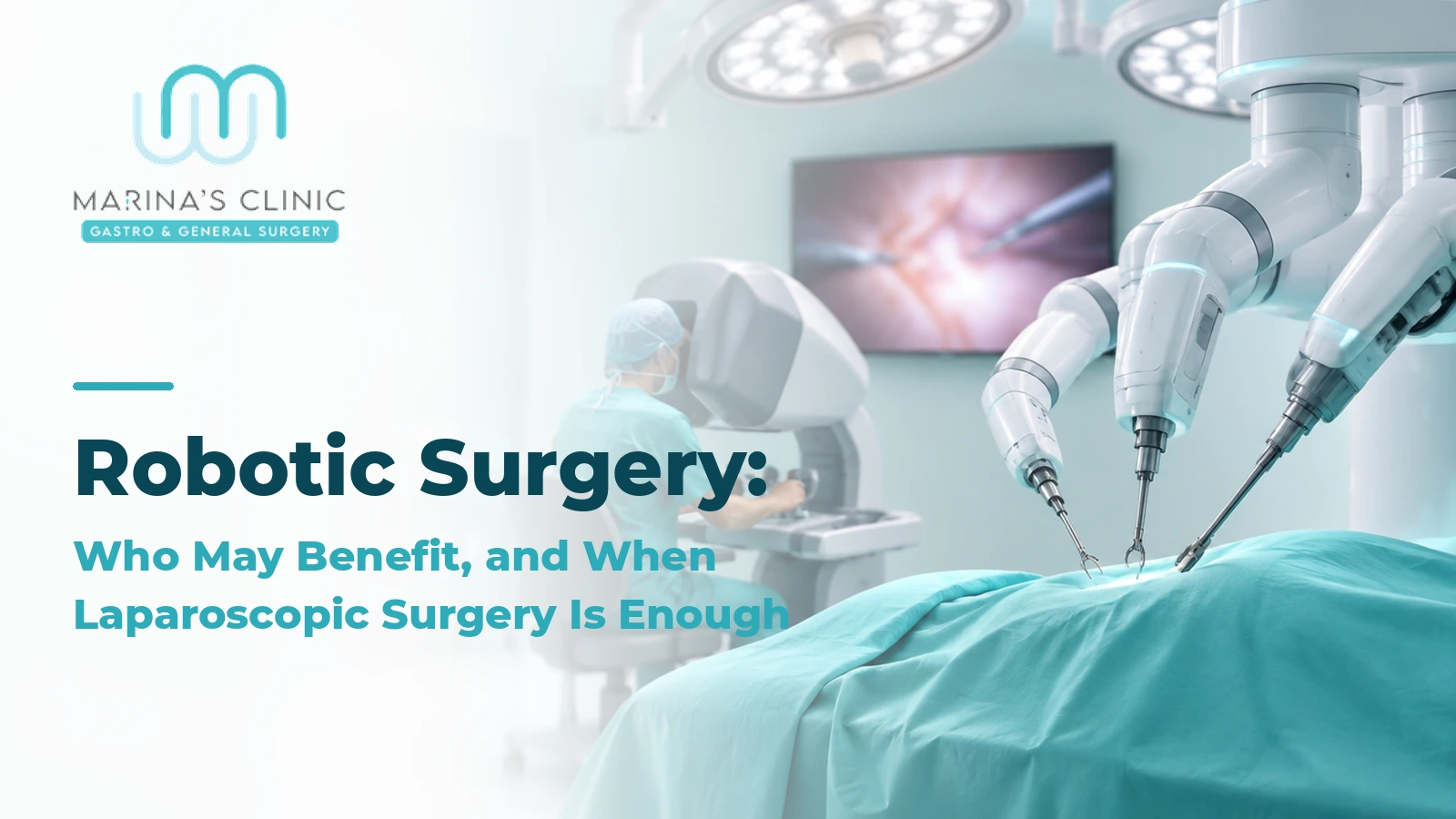
Robotic surgery, also called robotic-assisted surgery, is a type of minimally invasive surgery. The name can be misleading. A robot does not operate on its own. Your surgeon is in control throughout, sitting at a console in the operating theatre and guiding the robotic arms.
Like keyhole surgery, it is done through a few small cuts. A camera gives the surgeon a magnified, three-dimensional view of the area, and slim instruments follow the surgeon’s hand movements with great precision. Surgeons need additional specialised training to perform it.
Robotic Surgery vs Laparoscopic Surgery
Both are minimally invasive, so they share many benefits compared with open surgery: smaller cuts, less pain, lower risk of infection and often a shorter stay in hospital.
The difference lies in the tools:
- Laparoscopic surgery: the surgeon holds the instruments directly and watches the operation on a screen.
- Robotic surgery: the surgeon controls robotic arms. Their instruments can bend and rotate much like a human wrist, and the three-dimensional view adds depth.
In practice, studies comparing the two for common operations, such as gallbladder removal, show similar results and low complication rates. For hernia repair, short-term outcomes are also similar, although some patients report slightly less pain after robotic repair.
Who May Benefit from Robotic Surgery?
Robotic surgery can be especially helpful when an operation is complex or needs very fine movements in a tight space. Your surgeon may suggest it if you have:
- A complicated or recurrent hernia, where careful, precise stitching matters.
- Difficult anatomy, such as a deep or narrow area that is hard to reach.
- A planned operation where fine control of the instruments gives an advantage.
It is not suitable for everyone, though. Scar tissue from earlier surgery, for example, can make any minimally invasive approach harder, and sometimes the surgeon needs to switch to open surgery for safety.
When Laparoscopic Surgery Is Often Enough
For many straightforward conditions, keyhole surgery already gives excellent results. Gallbladder removal for gallstones and standard hernia repair are good examples. In these cases, evidence suggests robotic surgery does not clearly improve outcomes over laparoscopic surgery.
Robotic surgery can also take longer in the operating theatre and often costs more. So the right question is not “Which is more advanced?” but “Which approach is best for my condition?”
Frequently Asked Questions
Is robotic surgery safe?
Robotic surgery has been used for many years across many specialities and is considered a safe, established option when performed by a trained surgeon. Like any operation, it carries risks, including reactions to anaesthesia, bleeding and infection. Your surgeon will explain these to you in advance.
Is robotic surgery more expensive?
Often, yes. The technology and equipment add to the cost, so robotic surgery usually costs more than laparoscopic surgery. Costs vary with the operation and the hospital, so ask for a clear estimate before you decide.
Will recovery be faster after robotic surgery?
Compared with open surgery, recovery is usually quicker, with less pain and a shorter hospital stay. Compared with laparoscopic surgery, recovery is often similar. Your own recovery depends on the operation and your general health.
Questions to Ask Your Surgeon
A good conversation can make your decision much easier. Consider asking:
- Why do you recommend this approach for my condition?
- Would laparoscopic surgery give a similar result?
- What are the risks, and could the operation need to change to open surgery?
- How much experience do you have with this procedure?
- What will the total cost be, and how long will recovery take?
Whichever approach is chosen, the most important factors are the surgeon’s skill and experience, and a clear plan made together with you. Take your time, ask questions, and choose the option you feel informed and comfortable with.