If your surgeon has mentioned robotic surgery, or you have seen it advertised, you may be wondering what it really involves and whether it is better than the keyhole approach. The word “robot” can sound intimidating. Here is a clear, practical explanation, so you can ask the right questions about your own operation.
What Is Robotic Surgery?
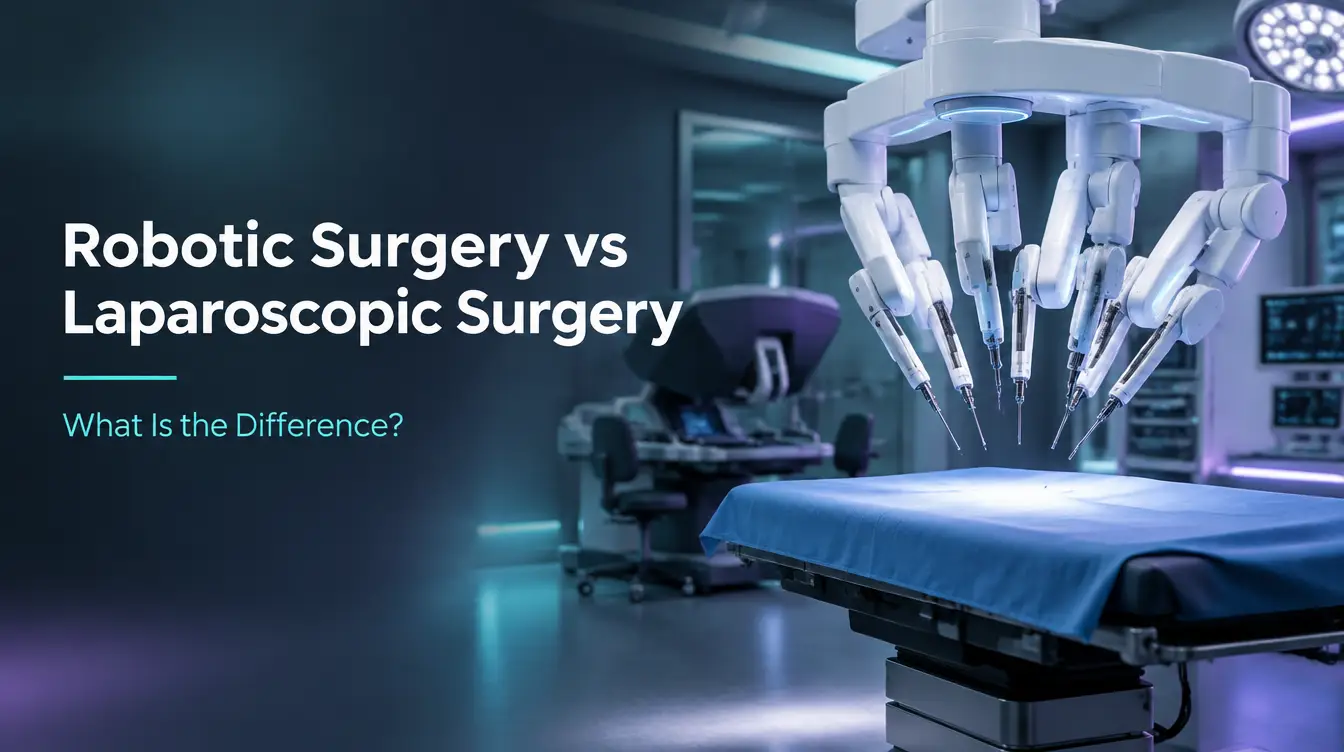
Robotic surgery, also called robotic-assisted surgery, is a form of minimally invasive surgery. Despite the name, the robot does not operate on its own. The surgeon controls every movement from a console in the operating room, and the robotic arms carry out those movements through a few small incisions.
One widely used system is the da Vinci surgical system. It gives the surgeon a magnified, three-dimensional view of the operating area and instruments that bend and rotate in ways a hand-held instrument cannot.
How Does It Differ From Laparoscopic Surgery?
Both approaches use small incisions and a camera. Compared with open surgery, both generally mean less wound pain, smaller scars and a quicker return to normal activities.
The differences lie in how the surgeon works:
- Position and control. In laparoscopic surgery, the surgeon stands at the operating table and holds the instruments directly. In robotic surgery, the surgeon sits at a console and guides the robotic arms.
- Vision. Laparoscopy usually provides a two-dimensional image. Robotic systems provide a three-dimensional view.
- Instrument movement. Robotic instruments have wrist-like joints, which can make fine tasks such as stitching in tight spaces easier.
To understand the technique that robotic surgery builds on, read about laparoscopic surgery and what keyhole surgery actually means.
Does Robotic Surgery Give Better Results?
Not necessarily, and this is where honest advice matters. For many routine operations, such as gallbladder removal, appendix removal and many hernia repairs, laparoscopic surgery is well established, effective and widely available. For these, a clear advantage for the robotic approach has not been shown.
Robotic surgery may offer more for complex or delicate work in confined areas. Examples include some complicated hernia repairs, rectal and pelvic surgery, and operations that need a lot of internal stitching.
There are also trade-offs. Setting up the robot can add time to the operation, and the cost is usually higher. The best choice depends on your condition, the surgeon’s experience and what the hospital offers.
Is Robotic Surgery Safe?
Robotic surgery is generally considered safe when performed by a trained team. It still carries the same general risks as any operation, such as bleeding, infection and reactions to anaesthesia.
The surgeon’s training and experience with the system matter as much as the technology itself. As with laparoscopic surgery, the surgeon may occasionally need to change to an open approach during the operation if that is safer. This is a safety decision, and it should be discussed with you beforehand.
How Long Is Recovery After Robotic Surgery?
Recovery depends mainly on the operation and your general health rather than on whether a robot was used. In general, it is comparable to laparoscopic surgery, with smaller wounds than open surgery. Our week-by-week laparoscopic recovery timeline gives a useful general picture, and your surgeon will advise you on your own plan.
How Much Does Robotic Surgery Cost in India?
Robotic surgery generally costs more than laparoscopic surgery, because the equipment and single-use instruments are expensive. The exact amount varies with the hospital, the procedure, the length of stay and the tests needed. Insurance coverage also varies by policy and by the hospital, so it is worth checking with your insurer before you decide.
Asking for a written estimate that compares the options for your condition is the most reliable way to plan.
Questions to Ask Your Surgeon
- Is robotic surgery available for my condition, and is it advised for me?
- What would I gain compared with laparoscopic surgery?
- How much experience does the surgical team have with this approach?
- How will the cost differ?
These questions apply to many procedures, including hernia surgery and bariatric surgery.
Take the Next Step
Choosing between surgical approaches should never feel confusing. If you have been advised surgery, or want a second opinion on the best approach, book an appointment to talk through your options with Dr. Preethi Mrinalini at Marina’s Clinic, Nungambakkam, Chennai.