When a doctor says you need an operation, one of the first questions is often whether it can be done through small cuts rather than a large incision. For many conditions of the abdomen, the answer is yes. For some, it is not. Knowing how that decision is made can make the conversation with your surgeon much easier.
Why Surgeons Often Choose a Laparoscopic Approach
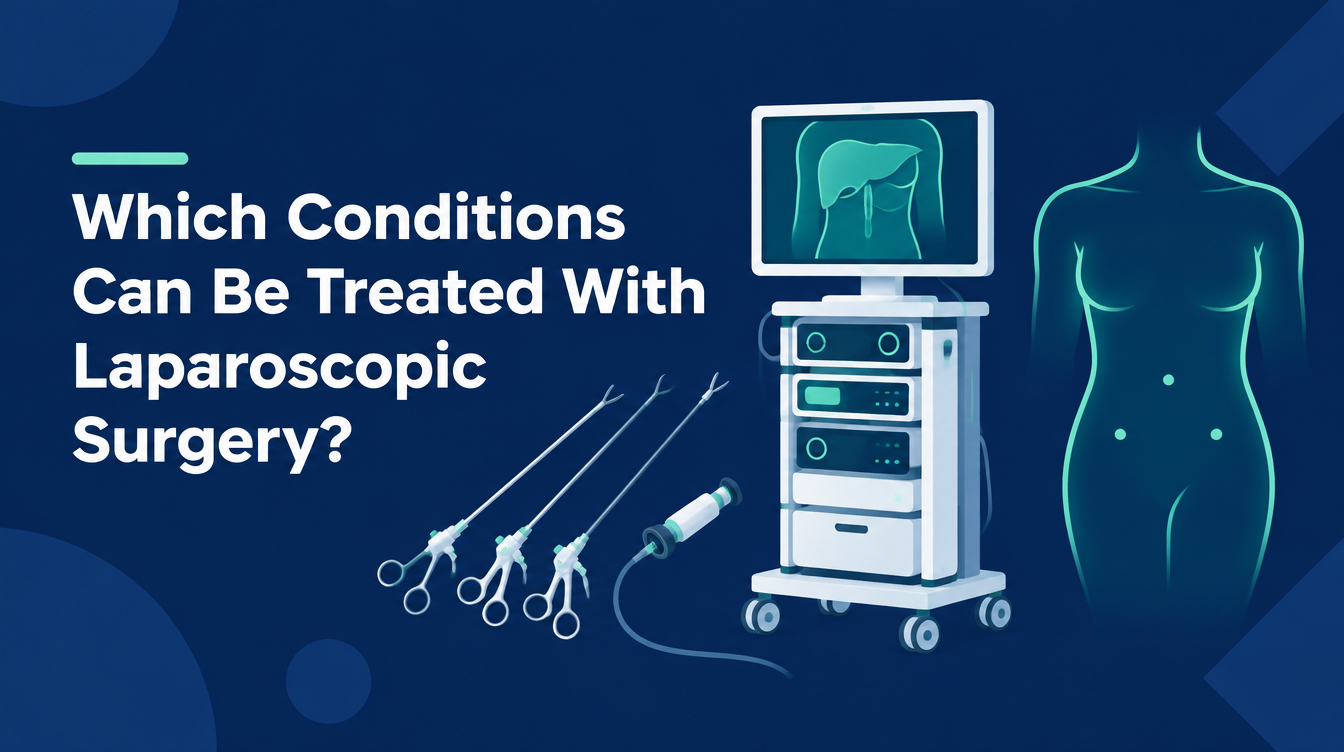
In laparoscopic surgery, also called keyhole surgery or minimally invasive surgery, the surgeon works through a few small incisions. A camera shows the inside of the abdomen on a screen, and slim instruments do the work. Smaller incisions generally mean less wound pain, smaller scars and, for many people, a quicker return to normal activities.
If you would like the basics first, our guide on what keyhole surgery actually means covers them. This article focuses on a different question: which conditions are suited to this approach.
Common Conditions Treated Laparoscopically
- Gallbladder stones. Removing the gallbladder through keyhole incisions, known as laparoscopic cholecystectomy, is the standard approach for most people who need surgery. Read more about gallbladder stone treatment.
- Appendicitis. Laparoscopic appendectomy removes an inflamed appendix. It can also be helpful when the diagnosis is uncertain, because the camera lets the surgeon see the abdomen directly. See our page on appendicitis surgery.
- Hernias. Laparoscopic hernia repair strengthens the weak area from the inside, usually with mesh. It may suit hernias on both sides or those that have returned. Our hernia surgery page explains the options.
- Acid reflux (GERD). When medicines are not enough, a keyhole procedure can reinforce the valve between the food pipe and the stomach. Learn more about GERD treatment.
- Obesity. Most weight loss operations are performed laparoscopically. Our page on bariatric surgery goes into detail.
- Selected bowel conditions. Some colorectal operations can also be done this way, depending on the condition and its stage.
This is not a complete list, and having one of these conditions does not automatically mean you need surgery. Many people are first advised on medicines, lifestyle changes or monitoring.
Who Is a Good Candidate for Laparoscopic Surgery?
There is no single rule. Your surgeon will usually consider:
- the diagnosis, and how advanced or complicated it is
- your overall health, including whether you are fit for general anaesthesia
- any previous abdominal operations, which can leave scar tissue
- the level of inflammation or infection around the organ
Most people are assessed individually after an examination and the necessary tests. Being older, having a higher body weight or having had earlier surgery does not always rule out a keyhole approach. It simply means the surgeon will plan more carefully.
When Is Open Surgery Still the Right Choice?
Sometimes open surgery is planned from the start. This may be because of a very large or complex problem, severe infection, or heavy scarring from earlier operations.
Occasionally, a surgeon begins laparoscopically and then moves to an open incision during the operation. This is a safety decision, made when the view is unclear, bleeding is difficult to control or the anatomy is hard to identify. It is not a failure of the surgery, and a careful surgeon will discuss this possibility with you beforehand so that nothing comes as a surprise.
How Much Does Laparoscopic Surgery Cost in Chennai?
The cost depends on the type of procedure, how long the operation takes, the anaesthesia and the length of your hospital stay. Many laparoscopic procedures need a stay of one night, and some can be done as day care, which can influence the overall cost.
Elective and emergency surgeries are often covered by health insurance, and our team can guide you through the process. Because each situation is different, a consultation is the most reliable way to get a clear estimate.
What to Ask Your Surgeon
Understanding your options helps you feel more in control. You might ask:
- Is laparoscopic surgery suitable for my condition?
- What is the chance that the operation will need to be converted to open surgery?
- What will recovery involve? Our week-by-week recovery timeline gives you a general picture.
Take the Next Step
If you have been advised surgery, or you are unsure whether you need it, speaking with an experienced laparoscopic surgeon can bring clarity. Book an appointment to discuss your symptoms and options with Dr. Preethi Mrinalini at Marina’s Clinic, Nungambakkam, Chennai.